
Birth opens a threshold.
A baby arrives, a family is transformed, and a woman begins a new chapter of her life. Yet in the weeks and months following birth, there is not always much space to acknowledge what has happened to her.
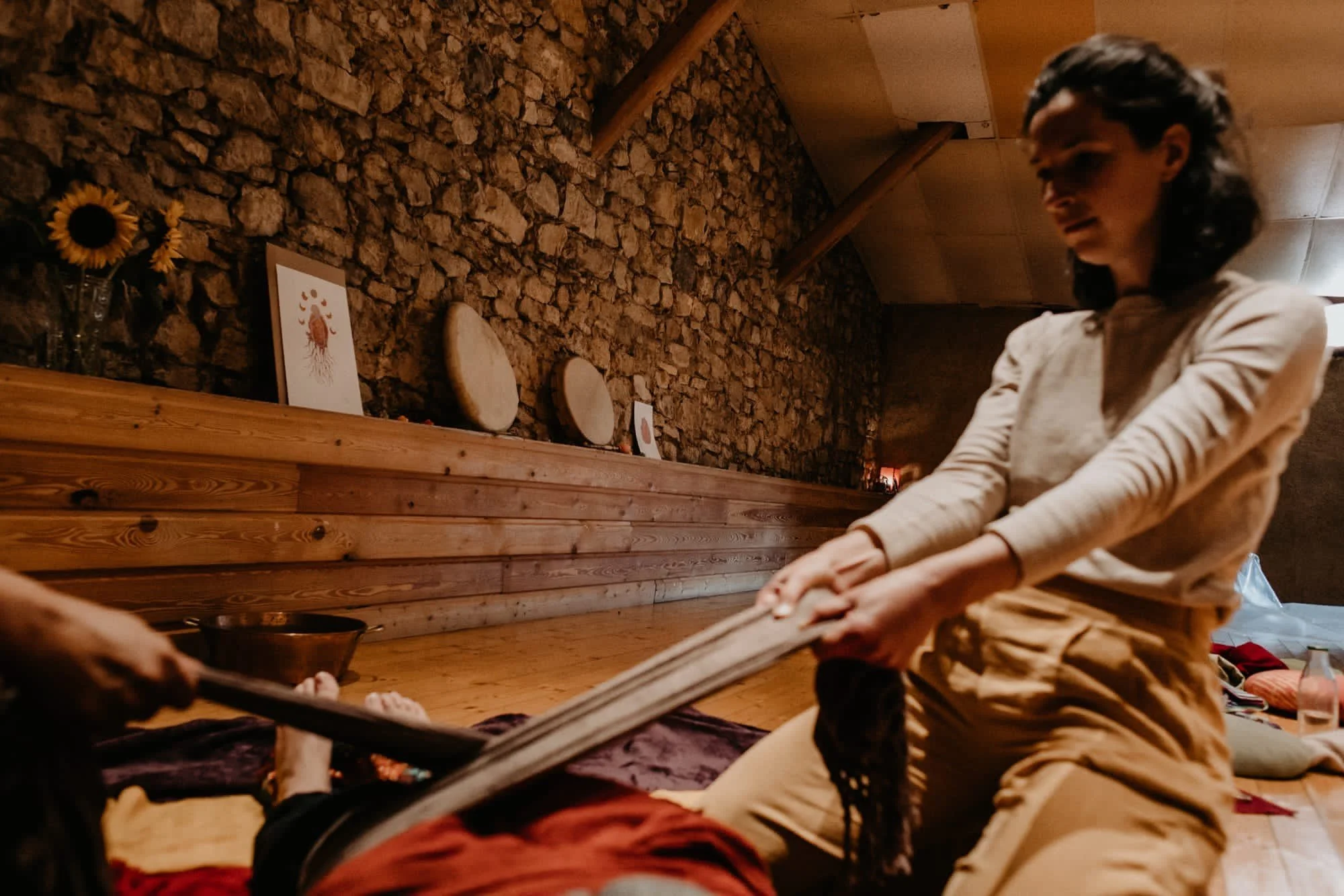
The Rebozo closing ritual offers an opportunity to pause, receive care and mark this transition.
It is a deeply meaningful practice for some women, bringing together touch, warmth, stillness and ritual in a space dedicated to the mother.
What is a Rebozo?
A Rebozo is a traditional Mexican woven cloth, used in many aspects of daily life and women's care. It has a particular place in some traditional practices surrounding pregnancy, birth and postpartum.
In the hands of a trained and respectful practitioner, the cloth can be used to offer gentle support, rocking, wrapping and a feeling of being held.
Rebozo practices are not one single universal ritual. Their meanings and forms vary, and it is important to acknowledge the cultural roots of these traditions rather than treating them as generic wellness techniques.
What is a closing ritual?
A postpartum closing ritual is a dedicated moment to honour the experience of pregnancy, birth and becoming a mother.
It may take place several weeks or months after birth, depending on the woman's wishes and circumstances. And it can also be held during other transitions - menopause, separation, a new chapter, bereavement.
The ritual can include different elements, such as:
A conversation about the birth and the transition into motherhood.
Envelopping 4-handed massage.
Sauna, yoni steam or warm bath.
Ritual closing with Rebozo cloths.
Time for reflection, gratitude or symbolic gestures.
A closing moment that marks the transition.
The experience should always be adapted to the individual. There is no single correct sequence and no obligation to include every element.
Why might a woman choose this ritual?
Pregnancy and birth invite a deep opening. Being open and sensitive to the subtlest clues is very useful for the first weeks after birth, so that the mother can stay connected to her baby. After some time, this opening can also make her extremely sensitive to everything around. This can be the time to do a Rebozo Closing Ritual — while keeping the connection to her baby, the mother can decide that it is time to slowly return to society in her new role and be more grounded.
A closing ritual creates a space in which the mother is not expected to care for anyone else. For a little while, she is the one being cared for.
Some women find meaning in acknowledging the end of pregnancy and the beginning of a new identity. Others appreciate the opportunity to receive nurturing touch, rest and attention.
For women whose birth experience was difficult or unexpected, a ritual may offer a gentle opportunity for healing and reflection.
A moment to gather yourself
The image of being gently wrapped can be powerful.
The cloth offers a physical sensation of containment and support. The warmth, stillness, and attention can create an opportunity to slow down and reconnect with the body.
For some women, the ritual is about closure. For others, it is about gratitude, recognition, or simply receiving care.
There is no need to feel a particular emotion or reach a particular conclusion.
The ritual belongs to the woman and should follow her wishes.
Honouring traditions with respect
Rebozo practices have cultural origins and meanings that deserve acknowledgement. When offering these rituals, it is important to approach them with humility, respect, and an understanding of their context. I bow to the long lineage of Mexican parteras and midwives, and get all my rebozos from women who hand-weave them, keeping the tradition alive.
The mother deserves a ceremony too
We celebrate the arrival of babies. We prepare rooms, buy gifts, take photographs and gather around the newborn.
But what if we also created a space to honour the woman who has crossed this threshold?
A Rebozo closing ritual can be one way of saying: I see what you have been through. I honour the woman you were, the mother you are becoming, and all that lies between.
At Naître Mère, these rituals are personalised moments of care, created around each woman's story, needs and wishes.
Because the birth of a mother deserves to be honoured too.